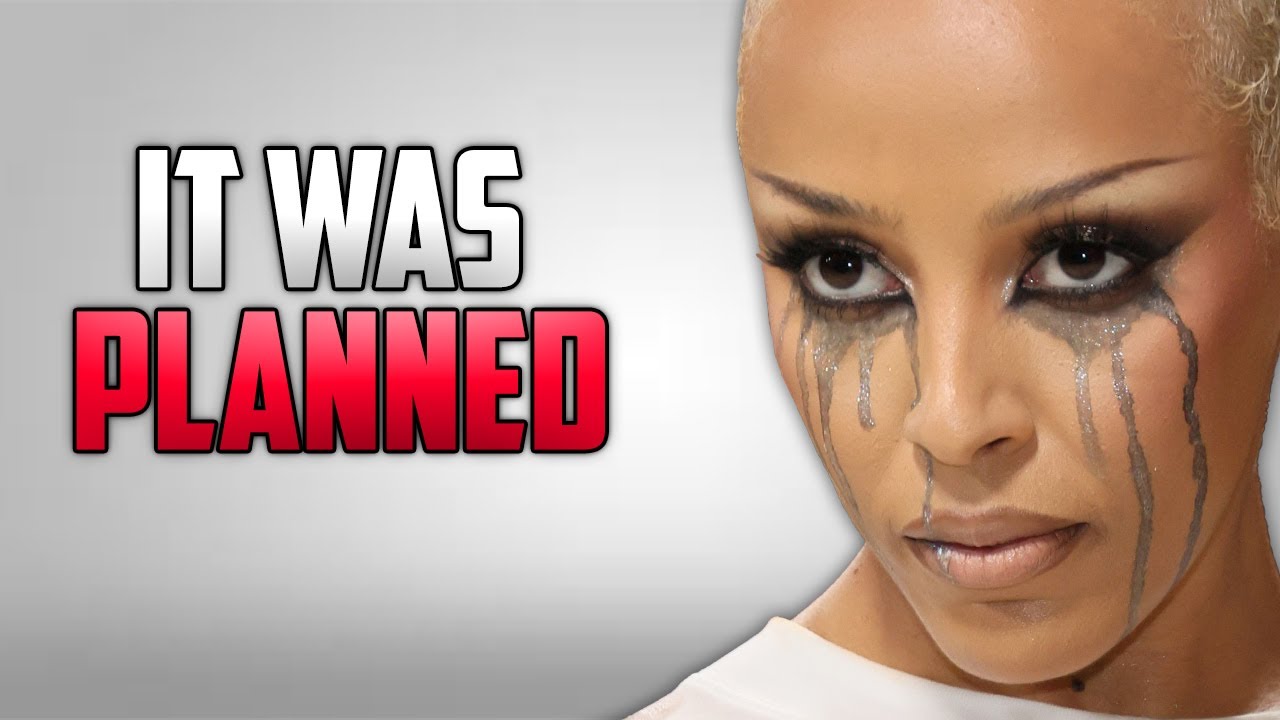
In 2023, the cultural landscape was defined by the chaos that surrounded Doja Cat. Every few weeks, the multi-talented artist was trending for a new, shocking transgression: shaving her eyebrows live on Instagram, publicly dissing her fiercely loyal fanbase, or showing up to high-profile events head-to-toe in painted red, leading many to label her music and image as “demonic.” The general consensus in the media and on social platforms was that the superstar was experiencing a highly public, painful meltdown—a celebrity spiraling under the intense pressure of fame.
However, looking back with the cold clarity of hindsight, a deeply compelling counter-narrative has emerged: Doja Cat’s highly publicized self-destruction was not a random collapse, but a strategic, deliberate, and necessary act of artistic and personal liberation. It wasn’t a meltdown; it was a message. The chaos was, in fact, an audacious act of control, designed to dismantle the very pop star machine that had built her up, loved her, and ultimately, caged her.
The Spark of Rebellion: The Unbearable Pressure
The first, subtle signs of this intentional shift began to surface in late 2021. Doja Cat—an artist who effortlessly blended pop, rap, and R&B with a quirky, charismatic humor that made her universally adored—went on Instagram Live and dropped a truth bomb that contradicted her highly successful public persona. She spoke candidly about the suffocating pressures of the music industry.
“I love fashion, I do… But do I want to do that because I have to? No. But I feel I feel pressured to do shit like that. I don’t want to do that. I want to be home, I want to make music, I want to play video games.”
At the time, this confession was viewed as a textbook case of celebrity burnout—the exhaustion that comes with constantly maintaining momentum and expectations. She faced criticism for being “ungrateful,” but she had drawn a line in the sand. The image that had made her rich and adored—the flawless, playful, easily digestible pop star—had become a prison. She was done trying to please everyone but herself. This was the beginning of the end of the beloved Doja Cat and the brutal birth of the villain.
The Point of No Return: The Paraguay Incident
The shift from burnout to open rebellion culminated in the infamous “Paraguay incident” in March 2022. After an event was canceled due to extreme weather, the star faced intense backlash for not engaging with fans who had waited outside her hotel. The criticism escalated rapidly when a fan tweeted a screenshot labeling her “public enemy number one,” to which Doja Cat shockingly replied: “I’m not sorry.”
This one response flipped the narrative instantly. Her “over party” began trending, fueled by comparisons to artists who performed impromptu shows to comfort fans. But Doja Cat’s reaction was not one of apology; it was a declaration of war. It culminated in her definitive, shocking tweet: “This shit ain’t for me so I’m out. Y’all take care,” followed by changing her Twitter name to “I quit.”
The night in Paraguay was the definitive breaking point. It was the moment she stopped being “everyone’s new favorite pop star” and openly acknowledged the crushing weight of their expectations. She was collapsing, or, more accurately, she was actively destroying the façade of the perpetually happy pop persona she was expected to maintain.
The Ultimate Betrayal: Burning the Bridge
By mid-2023, the relationship between Doja Cat and her fans had fractured entirely, shifting from friction to a full-blown celebrity-vs.-fan war. This time, it wasn’t the internet attacking her; it was the artist attacking the internet.
The controversy was initially sparked by criticism of her relationship with a man accused of predatory behavior. Instead of ignoring the pleas of her own supporters, Doja Cat went on the offensive, blocking and aggressively responding to her fanbase. The ensuing exchanges on Threads were brutal and highly calculated:
When a fan asked her to say she loved her supporters, she replied: “I don’t though because I don’t even know y’all.”
When a fan reminded her that they had supported her from the start and that she would be nothing without them, she fired back: “Nobody forced you.”
And to the fans who called themselves “Kittens,” a name she had allegedly given them, she delivered the final blow: “If you call yourself a kitten you need to get off your phone get a job and help your parents with the house.”
Doja Cat had intentionally burned the bridge between herself and the very people who streamed her songs, made her viral, and defended her name. This act served a vital, strategic purpose: it dismantled the parasocial relationship—the illusion that fans are intimately connected to a celebrity who doesn’t actually know them. She broke the illusion on purpose, rejecting the emotional investment and ownership the fans felt they had over her life and image. She was dismantling the pop star machine she had built, ready to destroy the cage, even if it meant turning everyone against her.
The Aesthetics of Annihilation: Shaving the Head and Embracing the Villain
The internal conflict soon manifested in her external image. Doja Cat’s subsequent aesthetic choices were not random acts of rebellion, but direct, visual consequences of her emotional and personal liberation, mirroring another pop icon’s famous breakdown.
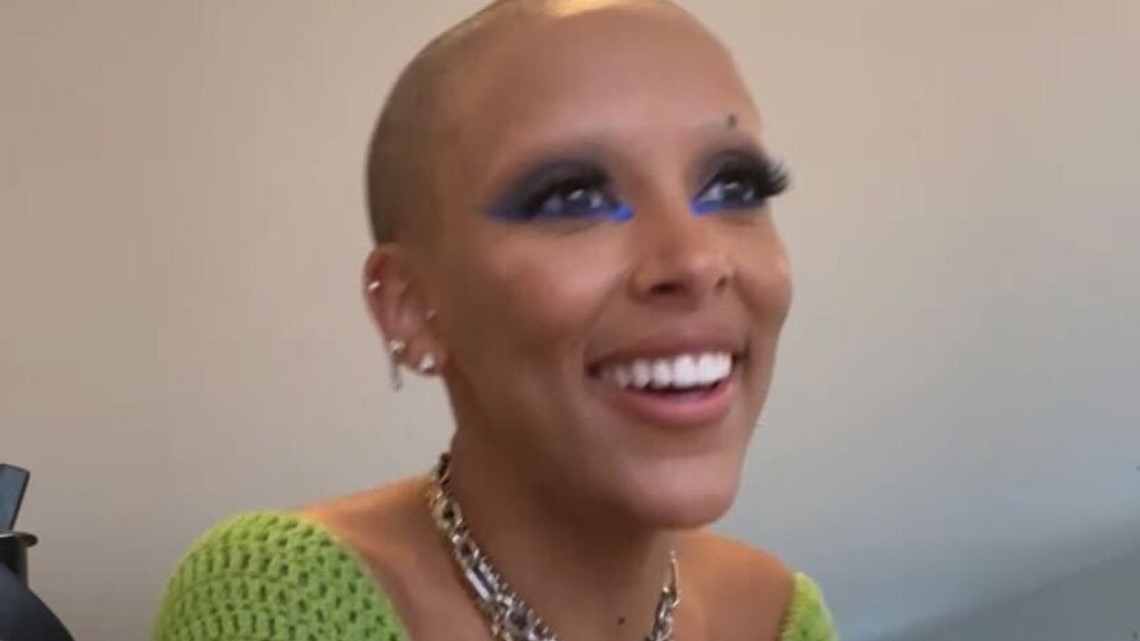
Her decision to shave her head and eyebrows was met with identical confusion, concern, and criticism that greeted Britney Spears during her 2007 mental health crisis. As Britney famously explained in her memoir, shaving her head was her way of “pushing back” against the relentless control over her image. Doja Cat’s reasoning was slightly different but carried the same core message of self-ownership.
“I just do not like to have hair… I was more concerned with how I looked and how my hair was doing and like how to keep it adhered to my scalp.”
For years, she felt like a slave to the industry’s beauty standards—the constant pressure to look flawless. Shaving her head and eyebrows was an act of rebellion, a way of saying: “You don’t get to own my image anymore.” She was rejecting the aesthetic box the music industry forces women into, transforming herself from a hyper-sexualized brand into an unpredictable, autonomous artist.
This commitment to chaos was then codified into her music with the release of the smash hit “Painted Town Red.” The imagery and theme of the song were clear: she was claiming the villain role that the internet had assigned her. She turned the piled-up controversy into fuel, refusing to play inside the box people tried to lock her in. The “demonic era” was a character—the rejection of conventional pop conformity—and it became an artistic smash hit, proving the stunning paradox of her strategy: she successfully used the destruction of her image to achieve career success on her own, unfiltered terms.

The Freedom of the Misfit
Doja Cat has always been difficult to categorize—too weird for mainstream pop, too alternative for R&B. This in-between space, which often made her feel like an outcast, is ultimately what made her relatable to the misfits and the weird kids who never saw themselves in the polished veneer of pop culture.
The chaos that defined her 2023 was ultimately the means to an end: freedom. She leaned into being the villain, she alienated her biggest supporters, and she destroyed the brand because, for her, that was the only way to reclaim her personal narrative.
Doja Cat’s saga is a brutal lesson in the nature of modern fame. It suggests that for some artists, the path to authentic creativity is not through seamless image management, but through radical self-annihilation. She chose to be hated and scrutinized, rather than loved and controlled, cementing the belief that her ultimate artistic genius lies not just in her talent, but in her shocking, strategic capacity for calculated self-destruction.