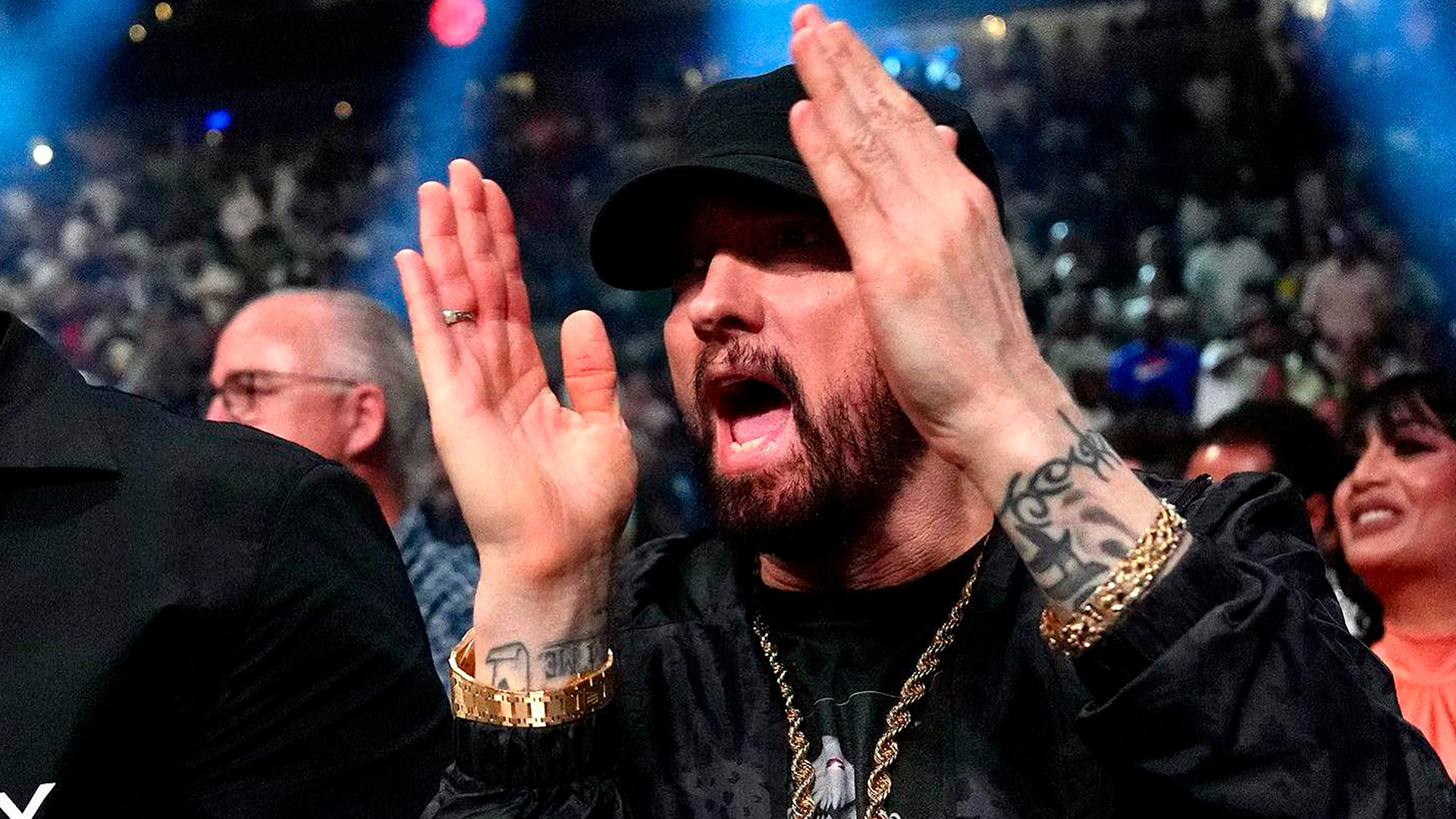
Eminem has spent decades making fans question how he manages to sound the way he does. Now, his latest collaboration has sparked a particularly unusual debate: are listeners hearing the real Slim Shady, or has artificial intelligence become part of the equation?
Maryland rapper IDK has stepped forward to address the speculation surrounding “WELCOME”, his new collaboration with Eminem, while also dropping an intriguing hint about the possibility of more music together. His comments come as he begins a new chapter with Shady Records and Interscope, placing him alongside one of hip-hop’s most recognisable figures.
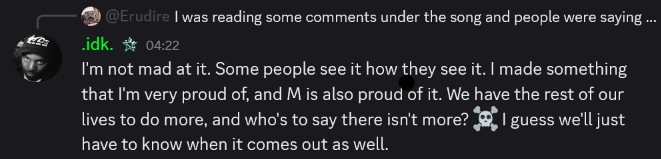
The conversation began after IDK connected with fans through Discord, where he regularly shares updates, discusses his creative process and answers questions directly from listeners.
Following the release of “WELCOME”, fans wanted answers about two things in particular: Eminem’s unusual vocal delivery and why the Detroit rapper had not contributed the full verse some listeners expected.

IDK’s response to the artificial intelligence question was emphatic. He rejected the suggestion that Eminem had used AI-generated vocals on their collaboration, expressing amusement at how widely the theory had circulated.
That response is significant because Eminem’s voice has become an increasingly discussed subject since the release of his 2024 album The Death of Slim Shady (Coup de Grâce).
The album brought the rapper’s infamous Slim Shady persona back into focus, using the contrast between different stages of his career as part of its central creative concept.
For longtime listeners, hearing elements associated with Eminem’s earlier vocal style naturally raised questions about how those sounds had been recreated.
Some listeners interpreted the changes in vocal texture as evidence of artificial intelligence, while others argued that Eminem was simply demonstrating his ability to revisit the delivery that made him famous.


The discussion became more complicated when people associated with Eminem’s recording process offered different explanations.
Producer FredWreck previously addressed speculation about The Death of Slim Shady, insisting that Eminem was performing his older vocal style himself rather than relying on AI to generate it.
Royce da 5’9″, meanwhile, suggested that certain voice-conversion techniques had been involved in some of the album’s recordings.
Those comments illustrate an important distinction that often disappears in online discussions about modern music production.
AI-generated vocals, voice-conversion technology and conventional studio processing are not necessarily the same thing.
An entirely synthetic performance created by a generative system is different from a human-recorded vocal that has been digitally processed. Voice-conversion tools can also alter the perceived characteristics of a recorded performance without necessarily replacing the original artist’s delivery.
That distinction matters particularly in Eminem’s case because his vocal identity has changed considerably throughout his career.
The aggressive, high-pitched delivery associated with early Slim Shady recordings sounds noticeably different from the deeper, more controlled performances found across many of his later releases.
His cadence, vocal emphasis and technical approach have evolved alongside his songwriting, making comparisons between different eras particularly interesting.
When a modern recording evokes the sound of Eminem from the late 1990s or early 2000s, it is understandable that listeners might wonder how the effect was achieved.
But a familiar-sounding vocal performance is not, by itself, evidence of AI involvement.
IDK’s comments specifically address “WELCOME”, rather than providing a definitive explanation of every production technique used throughout Eminem’s recent catalogue.
And while that clarification should help settle speculation surrounding their particular collaboration, the conversation highlights a much larger issue facing contemporary hip-hop.
As artificial intelligence becomes increasingly sophisticated, listeners are finding it harder to distinguish between authentic vocal performances, digitally manipulated recordings and completely synthetic material.
For an artist whose technical delivery has always been central to his reputation, those distinctions carry particular importance.
Eminem’s ability to manipulate his voice, switch characters and adopt different rhythmic patterns has been a defining feature of his music for decades. The arrival of AI technology introduces a new layer of uncertainty into how audiences interpret those abilities.
But the vocal debate was only one part of IDK’s conversation with fans.
Another question concerned the actual structure of “WELCOME”.
Some listeners had anticipated a traditional Eminem guest appearance, complete with an extended verse, after seeing the collaboration announced.
Instead, Eminem’s contribution centred on the hook, leaving certain fans disappointed that they had not received the lyrical showcase they expected.
IDK did not dismiss those reactions.
He acknowledged that listeners were entitled to their own interpretations while emphasising that both he and Eminem were proud of the finished record.
Then came the comment that could prove more interesting than the original controversy.
IDK suggested that their creative relationship had plenty of time to develop and questioned whether anyone could be certain that additional material did not already exist or might emerge later.
He stopped short of confirming another collaboration, but the implication was enough to leave the possibility open.
For Eminem fans, that is an intriguing prospect.
A full-length lyrical collaboration between the two artists could offer a very different experience from “WELCOME”, particularly given their respective approaches to songwriting and performance.
IDK has developed a reputation for conceptual projects, personal storytelling and an experimental approach to hip-hop production.
Eminem, meanwhile, remains closely associated with dense rhyme schemes, intricate wordplay and performances that place enormous emphasis on technical precision.
Their creative approaches are not identical, which is precisely why a more substantial collaboration could be interesting.
There is also the significance of IDK’s new relationship with Shady Records.
In his short documentary No Plan B, released alongside “WELCOME”, IDK discussed the experience of not previously having a team around him in the same way.
His new partnership therefore represents more than a distribution arrangement or another prominent feature credit.
It potentially places him within a professional environment associated with one of hip-hop’s most established artists and a label with a history of developing distinctive rap talent.
When asked about the relationship, IDK described the people involved positively and expressed particular admiration for Eminem.
That enthusiasm suggests he sees the partnership as a meaningful opportunity rather than simply a promotional moment surrounding a single release.
The timing also makes the collaboration especially noteworthy. “WELCOME” arrives during the 30th anniversary of Eminem’s debut album Infinite and features production from the late Detroit legend J Dilla, giving the track a historical connection that extends beyond IDK’s new label deal.
For Eminem, the record connects his earliest musical influences with a new generation of artists. For IDK, it provides an opportunity to introduce himself to listeners who might previously have known little about his work.
Yet the most revealing part of the Discord conversation may be IDK’s willingness to address criticism without turning it into a confrontation.
Rather than attacking disappointed listeners or encouraging speculation about artificial intelligence, he defended the music he had created and left the door open for future possibilities.
That approach is particularly refreshing at a time when discussions about hip-hop collaborations can become dominated by expectations, feature credits and arguments about whether a guest artist delivered enough bars.
Ultimately, “WELCOME” should be judged as the record its creators intended to release, not as the hypothetical Eminem verse some listeners imagined beforehand.
The more interesting question is what happens next. With IDK now connected to Shady Records, Eminem apparently pleased with their first release and the possibility of further collaborations left unresolved, their musical relationship could still be in its earliest stages.
Would fans rather hear Eminem deliver a full verse alongside IDK on their next collaboration, or does the combination of his distinctive hook and J Dilla’s production make “WELCOME” memorable enough on its own?