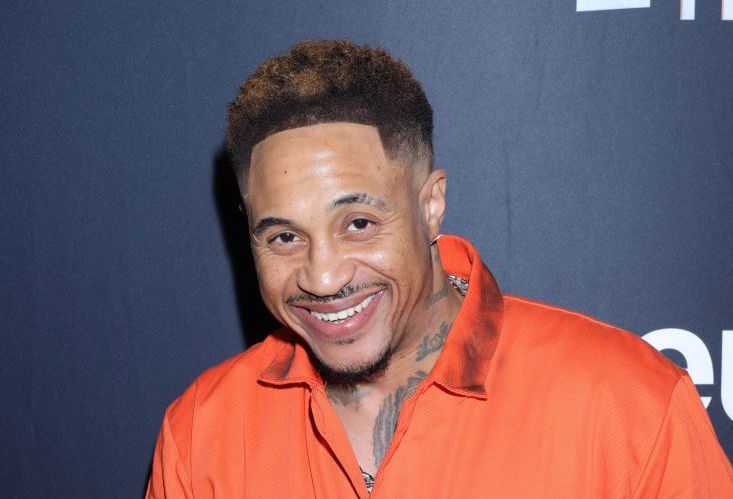
Orlando Brown’s Controversial Claims Spark Debate Over Celebrity, Rumors, and Responsibility

In the ever-evolving world of viral moments, Orlando Brown has once again drawn attention—this time for a series of explosive and deeply controversial claims. His remarks, targeting the personal health and hygiene of high-profile women, have ignited intense discussion online, raising broader questions about accountability, misinformation, and the public’s appetite for sensational content.
A Shift From Personal Struggle to Public Accusation
There is a long-recognized pattern in which former child stars struggle under the weight of early fame. In Brown’s case, however, that struggle has taken a more outward-facing turn. Rather than remaining a personal matter, his recent statements have escalated into public accusations aimed at some of the most prominent figures in entertainment.
His comments have not simply lingered at the edges of public discourse. Instead, they have spread rapidly, fueled by social media platforms that often amplify controversy. The result is a cycle in which increasingly extreme claims gain visibility, regardless of their credibility.
Allegations and the Question of Truth
Among the most widely discussed remarks are Brown’s claims about Beyoncé, which have been presented without evidence yet framed by him as a form of revelation. He portrays his statements as proof of some larger truth, even suggesting that the backlash he faces reinforces his position.
This approach follows a familiar pattern, where unverified accusations are positioned as courageous disclosures. At the same time, the claims themselves stand in stark contrast to any established facts, leaving audiences to navigate a mix of speculation and reaction.
Revisiting Old Narratives
Brown’s commentary also extends to past events involving Rihanna and Jay-Z, where he references long-circulated rumors and controversial sources. In doing so, he shifts the focus away from widely acknowledged realities and toward alternative interpretations that lack substantiation.
This reframing has drawn criticism for redirecting attention from serious, documented issues to speculative narratives. It illustrates how easily past events can be reshaped when presented through a new, highly charged lens.
Targeting Image and Identity
Another recurring element in Brown’s statements is his focus on personal hygiene, particularly in his comments about Nicki Minaj and others. These remarks rely on vivid, often demeaning descriptions that blur the line between critique and insult.
Such commentary reflects a broader pattern of reducing individuals to exaggerated or fabricated traits. In this context, what is framed as candid expression often functions as a form of public shaming.
A Wider Pattern of Reaction
The response to these claims has not been limited to Brown alone. Other figures have echoed similar language, reinforcing a narrative that labels women in ways that strip them of complexity and dignity. These reactions reveal an underlying dynamic in which controversy becomes a shared performance, amplified through repetition.
At the same time, the public’s engagement plays a key role. Viral clips and provocative statements are rewarded with attention, creating an environment where extreme claims can thrive regardless of their accuracy.
The gap between rumor and reality is not new, but it has been highlighted in high-profile legal cases. Cardi B’s courtroom victory over similar allegations demonstrates the tangible consequences of spreading false claims, as well as the effort required to counter them.
Despite such outcomes, misinformation continues to circulate. The speed and reach of online platforms often allow rumors to persist even after they have been challenged or disproven.
At its core, this situation reflects a larger issue within modern media culture. Statements made for attention can quickly take on a life of their own, shaping public perception in ways that are difficult to reverse.
Brown’s role in this dynamic is not that of a whistleblower but of a participant in a system that rewards shock value. His comments, directed at individuals who have not engaged with him, rely on speculation rather than substance.
A Reflection of the Media Landscape
The ongoing reaction to these claims highlights the tension between visibility and responsibility. As long as platforms continue to amplify controversial voices, moments like this will remain part of the broader conversation.
In the end, the discussion extends beyond any one individual. It speaks to a culture where attention often outweighs accuracy, and where the line between commentary and harm is frequently blurred.