A recent wave of online discussion has put Cardi B’s “Little Miss Drama” tour under the microscope—not for its performances, but for its reported revenue. Conflicting figures have sparked curiosity, with some sources placing the total near $70 million and others listing a slightly lower number.
A Small Gap, Big Attention
The conversation centers on a modest discrepancy. One widely cited figure, drawn from industry tracking outlet Pollstar, places the tour’s gross revenue at approximately $68.4 million. At the same time, other reports and public statements suggest a number closer to $70 million.
While the difference is relatively small, it has been enough to generate debate across social media and fan communities.
Why the Numbers Vary
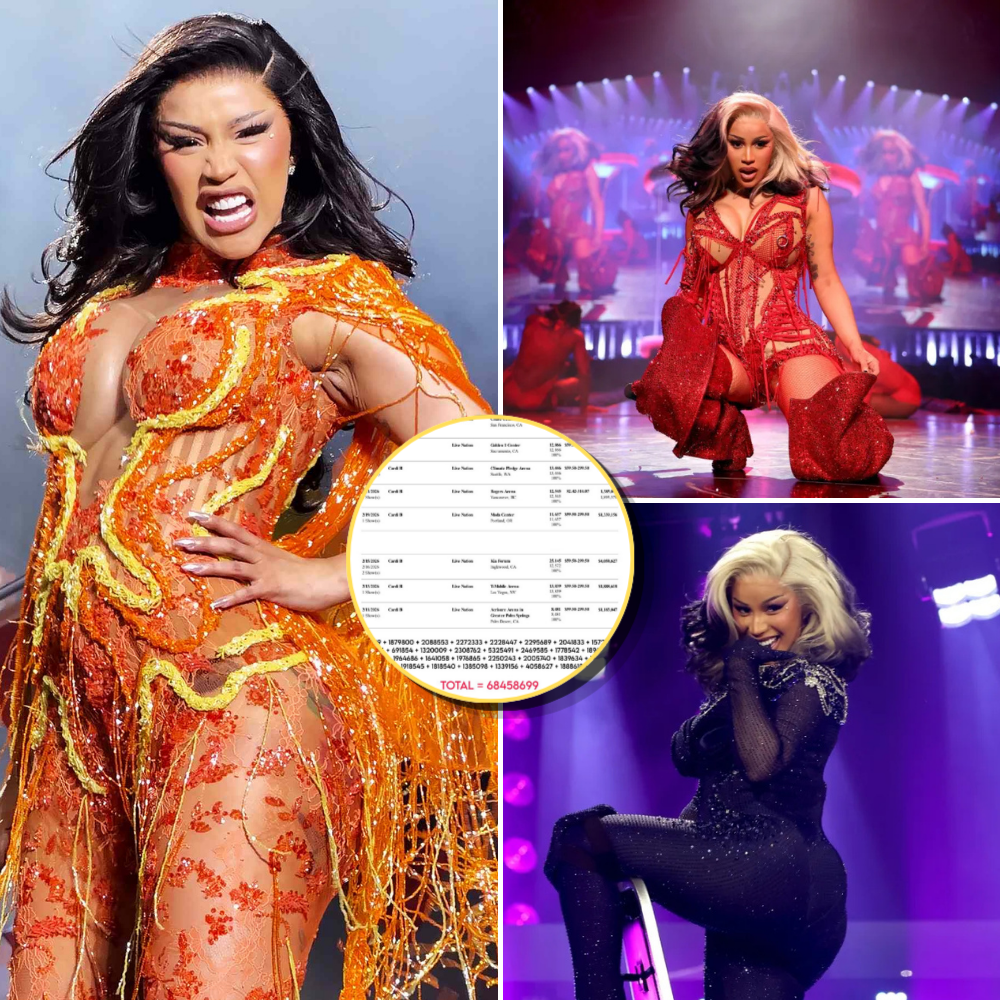
Industry observers point out that differences like this are not unusual. Tour revenue is not always a fixed number from the start. It can shift depending on when the data is reported, whether all tour dates have been included, and how figures are calculated or converted.
Initial estimates are often based on partial information. As more data becomes available—such as late-reported ticket sales or updated figures from venues—totals may be revised. This means different sources can present slightly different numbers without any underlying issue.
The Role of Data Tracking
In addition to Pollstar, discussions have also referenced Touring Data, another platform that compiles performance figures. Some online commentary has suggested changes to previously published numbers, though there has been no confirmation of outside influence.
Adjustments to data are a normal part of the reporting process. As more complete information comes in, earlier estimates are often updated or corrected.
Public Perception vs. Industry Reality
Part of the attention comes from how quickly numbers spread online. In the digital age, figures are shared, compared, and debated almost instantly—sometimes without full context.
For high-profile artists, tour milestones are often highlighted publicly, using internal projections or early totals. These may differ slightly from third-party estimates, especially if they are based on different reporting timelines.
A Matter of Perspective
Experts note that the current gap falls within a typical range of variation for large-scale tours. Without access to full financial records, it’s difficult to pinpoint exact reasons for the difference, but nothing so far suggests anything beyond normal reporting variation.
As more complete data becomes available, final figures are often clarified, and discrepancies tend to narrow or disappear.
The Bigger Picture
Ultimately, the discussion says as much about how data is consumed as it does about the numbers themselves. Small differences can take on greater significance when viewed without context, especially when tied to major names and high expectations.
For now, the reported totals remain closely aligned, and the conversation highlights a familiar reality in the entertainment industry: revenue reporting is a process, not a single moment in time.
As the tour’s final numbers settle, the focus will likely shift back to what matters most—the scale and impact of the performances themselves.